New York Codifies Disparate Impact: A Defining Moment for Fair Housing Compliance and the Effect of HUD’s Recent Statement
On December 19, 2025, New York State formally enacted into law one of the most significant anti-discrimination doctrines, known as “disparate impact.” Through an amendment to the New York State Human Rights Law, codified under New York Executive Law § 296(5-a) [see https://bit.ly/4drGysx] (the “Disparate Impact Law”), New York has formally adopted a legal theory that has long shaped housing discrimination enforcement but until now had not been explicitly set forth in statutory form.
For real estate professionals, this represents a meaningful shift in how liability is assessed, focusing less on intent and more on outcomes. The new law now stands in sharp contrast to the federal direction taken by HUD over the past year, and as recent as April 24th, in its letter to the real estate industry.
The Evolution of Disparate Impact
In 2013, the U.S. Department of Housing and Urban Development (“HUD”) issued a formal rule [see https://bit.ly/4bWcJOb] recognizing disparate impact liability under the Fair Housing Act and establishing a uniform burden-shifting framework. That framework was affirmed by the U.S. Supreme Court in Texas Department of Housing and Community Affairs v. Inclusive Communities Project, Inc. [see https://bit.ly/4bX4YHX], where the Court held that facially neutral policies may violate the Fair Housing Act if they produce unjustified discriminatory effects.
Why New York Acted Now
New York’s decision to enact the Disparate Impact Law must be viewed against the backdrop of shifting federal policy. On October 26, 2020, HUD promulgated a rule [see https://bit.ly/4m3q0sN], revising the burden-shifting test in favor of defendants. On April 23, 2025, President Trump issued an Executive Order [see https://bit.ly/4165KNO] “…eliminat[ing] the use of disparate-impact liability…to the maximum degree possible.” On September 17, 2025, HUD’s Office of Fair Housing and Equal Opportunity withdrew numerous interpretive guidance documents [see https://bit.ly/4lZPIhU]. On January 14, 2026, HUD published a proposed rule to remove its discriminatory effects regulations entirely from 24 CFR Part 100, Subpart G.
By enacting Executive Law § 296(5-a), New York effectively removed federal-level uncertainty at the state level. The statute makes clear that practices resulting in a disproportionate adverse effect on protected classes are unlawful unless justified by a substantial, legitimate, and nondiscriminatory interest.
HUD’s April 24, 2026 “Dear Colleague” Letter
The federal-state divergence widened even more on April 24, 2026, when Craig Trainor, HUD’s Assistant Secretary for Fair Housing and Equal Opportunity, issued a “Dear Colleague” letter, entitled “HUD Empowers Real Estate Agents to Better Support American Homebuyer” [see https://www.hud.gov/news/hud-no-26-028], to state and local housing groups and real estate professionals. HUD’s letter expressly states that real estate agents and brokers do not violate the Fair Housing Act merely by discussing the prevalence of crime or the quality of schools in neighborhoods with prospective homebuyers or renters. The letter took aim at industry guidance, including the National Association of REALTORS® article entitled “The Safety Series: ‘Is This a Safe Neighborhood?’ Don’t Answer That,” and called on the industry to “revisit ethics training materials and reconsider public statements” on these topics. HUD Secretary Scott Turner framed the letter as a corrective to Biden-era policy he characterized as DEI-driven. In substance, the letter is a green light from HUD for agents to share crime and school data more freely.
Why New York Agents Should Not Change Course
New York real estate professionals must understand that HUD’s April 24, 2026 letter does not change their obligations under New York law. The letter is interpretive guidance regarding the federal Fair Housing Act, it cannot override the New York State Human Rights Law or the disparate impact provisions of the new Disparate Impact Law.
Under New York law, liability turns on the discriminatory effect of a practice, not on whether the federal Fair Housing Act would tolerate it. Discussions of crime statistics or school quality, even when delivered consistently and in good faith, can give rise to claims of “steering” or carry a disparate impact on protected classes. New York’s expanded protected categories, which include lawful source of income, gender identity or expression, and military status, make such claims more readily available than under federal law. Selectively volunteering such information or volunteering it in ways that correlate with neighborhood demographics, can expose a broker to state-level liability regardless of HUD’s federal posture.
Accordingly, New York brokers and agents should not change existing policies, scripts, or training materials in response to the HUD letter. The prudent course is to: (i) maintain established practices of directing consumers to objective third-party sources for crime and school information; (ii) avoid subjective characterizations of neighborhoods or school districts; and (iii) apply disclosure and screening practices consistently across all clients. What HUD now permits federally may still violate the New York State Human Rights Law.
Other Practical Implications
Beyond the crime and school issues, disparate impact claims in New York are most likely to arise from facially neutral policies that disproportionately exclude protected groups, rigid income requirements that affect, for example, voucher holders, blanket criminal-history prohibitions, and credit score thresholds. Algorithmic and AI-driven tenant screening and similar search related tools are also an emerging concern. If the output of such screening tools disproportionately impacts protected classes, liability may arise even where no human actor intended a discriminatory result.
New York Agents Need to Hold the Line
New York has reinforced a central principle of fair housing: equal opportunity must be measured not only by intent, but by outcome. While federal policy under HUD has shifted toward deregulation, including HUD’s April 24, 2026 letter encouraging agents to share crime and school data, New York real estate professionals must continue to operate under the stricter state-level standards. The prudent course for real estate agents is to hold the line and not change their existing fair housing policies in response to the new HUD guidance. They should document the legitimate justifications for the policies in place, and continue to evaluate every practice for its actual effect on protected classes.
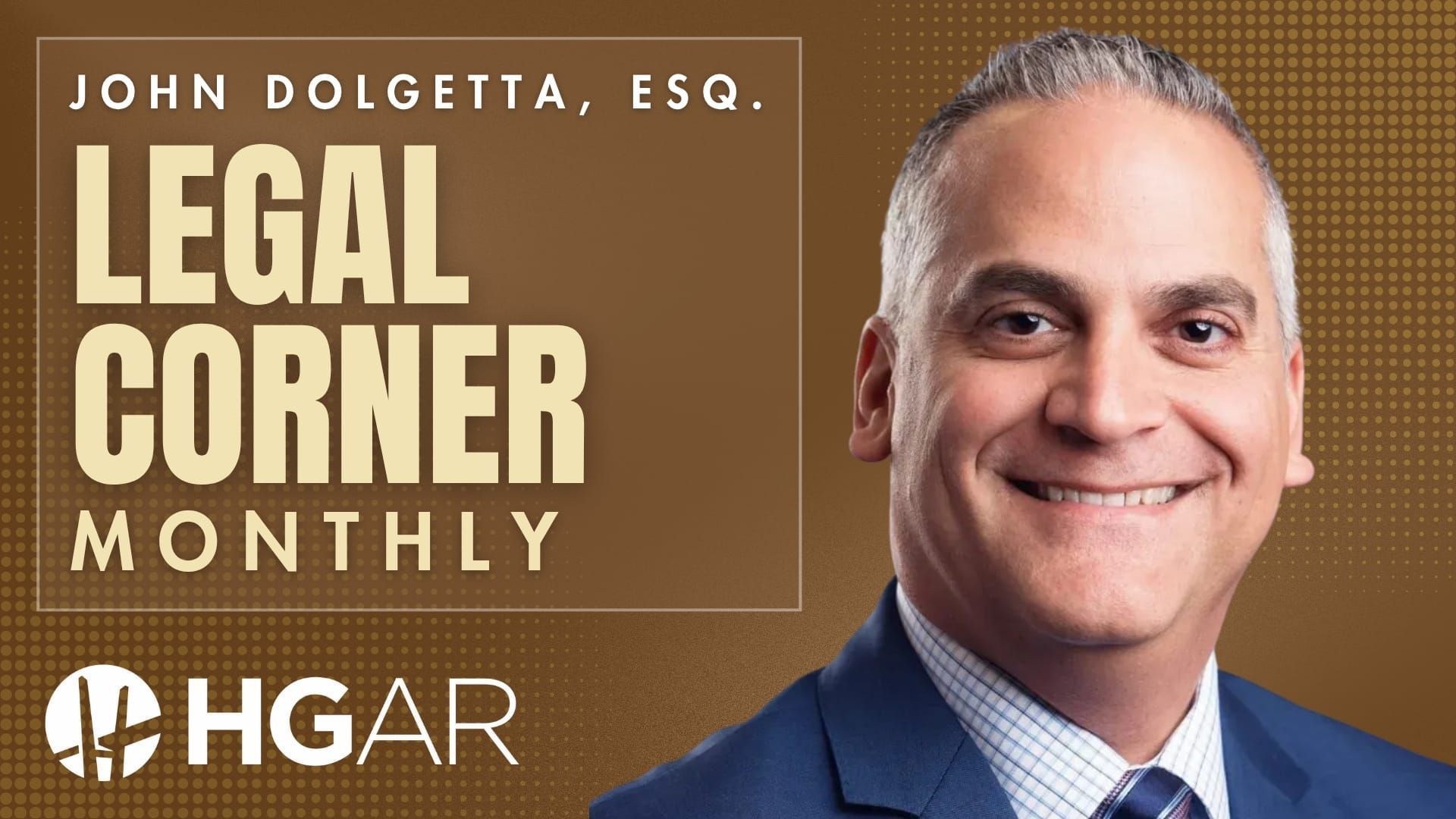
About the author: John Dolgetta, Esq. is the principal of the law firm of Dolgetta Law, PLLC. For information about Dolgetta Law, PLLC and John Dolgetta, Esq., please visit http://www.dolgettalaw.com. The foregoing article is for informational purposes only and does not confer an attorney-client relationship and shall not be considered legal advice. The views and opinions expressed in this article are solely those of the author and do not necessarily reflect the views or positions of HGAR, its affiliates, or any other entity.