Business Groups Hail SEQRA Reforms, Climate Law Timeline Rollbacks in NY State Budget
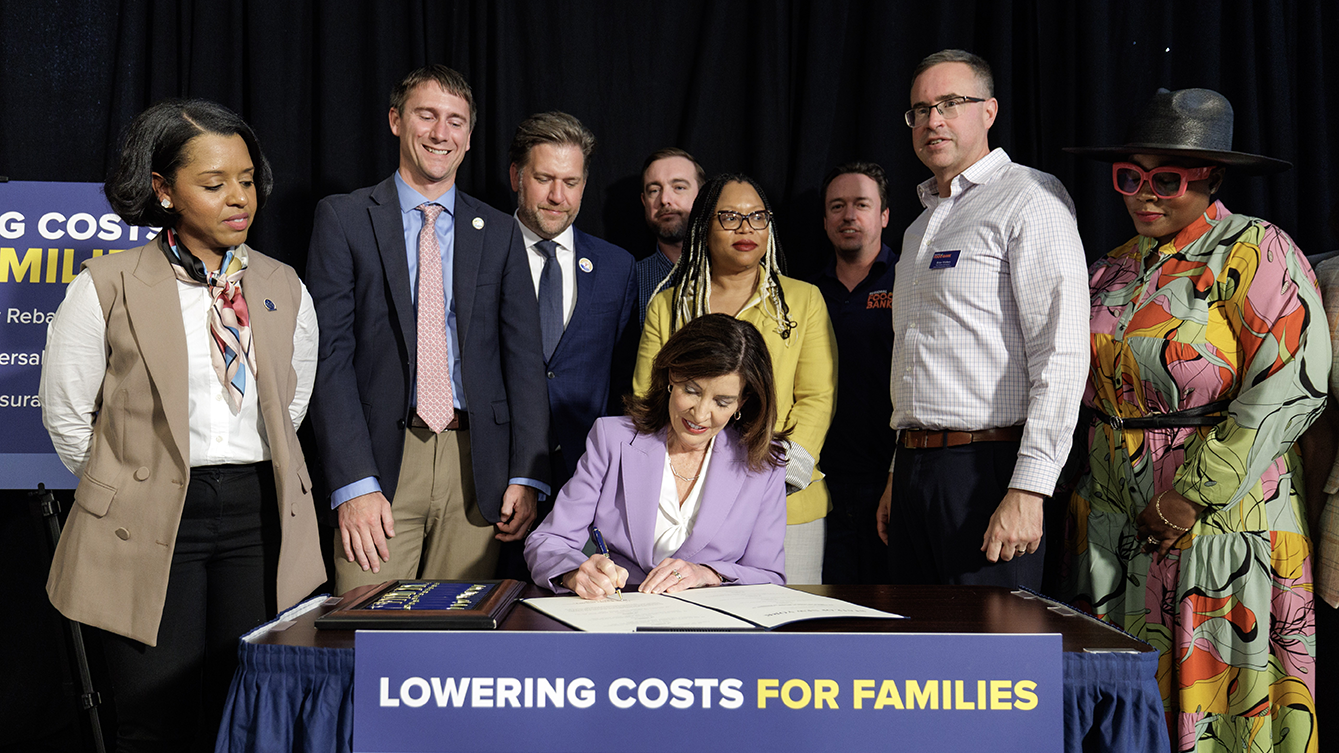
ALBANY—Although it came almost two months late and not without controversy, the FY 2027 New York State budget included a host of reforms and policy changes that will surely benefit economic development and spur private investment going forward.
Chief among the reforms included in the $268.5-billion budget that was signed by Gov. Kathy Hochul on May 28 were changes proposed by the governor to the State Environmental Quality Review Act (SEQRA) that were part of her “Let Them Build” agenda that will help expedite the construction of new housing and major infrastructure projects.
“Red tape and duplicative reviews have stopped New York from doing the very building that made us the envy of the world, making our housing more expensive and our infrastructure outdated—that ends today,” Gov. Hochul said. “By removing these barriers and empowering communities across the state, we are working to drive down costs of critical housing and infrastructure and sending a simple message: now is the time to build.”
The SEQRA reforms will provide exemptions from duplicative environmental review to accelerate housing development. By cutting red tape and speeding up the timeline to construction, the changes in the Let Them Build agenda will help cut costs and speed construction for qualifying housing projects at the following unit caps:
- Urbanized areas outside of New York City: up to 300 units.
- Non-urbanized areas: up to 100 units, and up to 20 units in areas that do not have zoning.
- New York City: up to 250 units citywide and up to 500 units within medium and high-density areas.
The housing projects must be on previously disturbed land and connected upon occupancy to existing water and sewer systems. The law does not supersede environmental requirements, permitting or local zoning, state officials noted.
The legislation adds further SEQRA exemptions for critical categories of projects including clean water infrastructure, public parks and trails, green infrastructure and public schools within New York City.
Currently, SEQRA review timelines vary greatly across projects, creating unpredictability for local communities, project sponsors, and state agencies alike. This uncertainty can contribute to significant project delays and add substantial costs to project budgets. To address those issues, the SEQRA reforms now establish a two-year timeline to complete an environmental impact statement, creating clear project schedules and faster decisions.
A host of business and political leaders throughout New York State praised the enactment of the SEQRA reforms as a critical first step in balancing economic growth with environmental protection.
HGAR President Rey Hollingsworth Falu said, “The Hudson Gateway Association of Realtors strongly supports the governor and legislature's decision to modernize SEQRA and remove unnecessary barriers to housing development. For too long, projects that could help address our region's housing shortage have been delayed by lengthy and duplicative review processes. These reforms strike an appropriate balance between environmental stewardship and the urgent need to create more housing opportunities for New York.”
New York State Association of Realtors President Ron Garafalo echoed Hollingsworth Falu’s sentiments, stating: “The New York State Association of Realtors applauds Governor Kathy Hochul and legislative leaders for reaching agreement on targeted reforms to New York’s SEQRA process as part of the 2027 New York State budget. Modernizing SEQRA is an important step toward addressing New York’s housing affordability and supply challenges by reducing unnecessary delays and duplicative review requirements that increase costs and slow the development of critically needed housing across New York.”
Changes to CLCPA
The enacted budget also included some controversial changes to the state’s Climate Leadership and Community Protection Act (CLCPA) that was passed in 2019, which state officials said were necessitated by “federal and macroeconomic headwinds.” The budget amends the CLCPA to ensure regulations are still tied to achieving the state’s 2050 reduction mandate while tying them to a new interim emissions reduction target of 60% by 2040. The original CLCPA called for the reduction of greenhouse gases by 40% from 1990 levels by 2030. The statutory target of reducing emissions by 85% by 2050 remains in effect.
Other changes to the CLCPA in the budget include:
- Updating the methodology by which New York State measures emissions to adopt the Intergovernmental Panel on Climate Change’s emissions accounting, aligning New York with 48 other states and global standards.
- Requiring that the development of regulations to meet stipulated climate goals must consider feasibility and affordability.
- Increase funding for disadvantaged communities, requiring they receive 40% of the benefits of investment funding to meet climate goals, up from 35%.
The changes to the CLCPA were mostly supported by business groups, including the Business Council of New York State, but were heavily criticized by environmental organizations.
Budget Represents ‘Meaningful Progress’
Concerning the overall state budget, HGAR’s Hollingsworth Falu noted that it reflects many of the priorities HGAR and its partners have been advocating for over the past several years and that HGAR has consistently called for policies that increase housing supply, protect property rights, and improve affordability. He said that the inclusion of meaningful SEQRA reforms demonstrate that policymakers are listening to the concerns of housing professionals, local communities, and prospective homeowners across New York.
“Housing affordability remains one of the greatest challenges facing families throughout the Hudson Valley and New York City. By streamlining approvals for appropriately located residential development and investing in first-time homebuyer assistance, affordable housing, and innovative construction technologies, this budget takes important steps toward expanding access to homeownership and rental opportunities,” he added.
HGAR was pleased that several proposals opposed by Realtors were not included in the final budget, including measures that would have imposed new taxes on home purchases, second homes, and additional transfer taxes.
He concluded that while there is still much work to be done to address New York's housing challenges, the budget represented “meaningful progress.”