Gov. Hochul Proposes $50-Million SRO Funding Plan
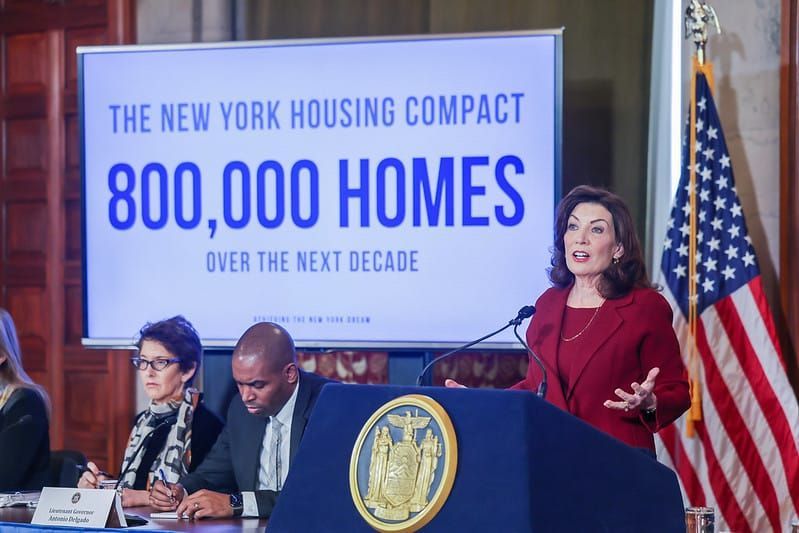
ALBANY—While New York Gov. Kathy Hochul has decided not to press forward with her controversial “New York Housing Compact” plan, the governor did announce on Dec. 12 a significant funding plan to rehabilitate or preserve Single Room Occupancy (SRO) apartments as part of her ongoing efforts to address the state’s housing crisis.
The $50 million in funding, available through the New York State Homes and Community Renewal, will be used for preservation projects that rehabilitate SRO units to bring them into a state of good repair and add private bathrooms to these units where possible.
The new SRO preservation program is part of the Gov. Hochul’s $25-billion comprehensive plan to create or preserve 100,000 affordable homes across New York, including 10,000 with support services for vulnerable populations.
“Existing single-room occupancy units are an important aspect of the affordable housing ecosystem, especially for vulnerable individuals that are eligible for supportive services, such as those experiencing chronic homelessness, victims of domestic violence, those living with physical disabilities, and individuals suffering from mental illness,” Gov. Hochul said. “By creating this program, we are adding an important tool to our toolbox as we work to combat the housing crisis, particularly in New York City where these types of apartments provide a safe, secure, affordable home for thousands of residents.”
HCR Commissioner RuthAnne Visnauskas said, “Single Room Occupancy units are a vital affordable housing resource and often are aligned with supportive services that play an important role in protecting vulnerable residents and allowing them to remain in their communities and neighborhoods. This innovative $50-million initiative will enhance our existing resources and better ensure that SROs across the state are safe, functional, and in good repair for the people who rely on them for a place to call home.”
Financing for SRO preservation will be made available through HCR’s current Supportive Housing Preservation Program, which is designed to preserve and improve existing, permanent supportive housing units, including those funded though the Homeless Housing Assistance Program and by the NYS Office of Mental Health.
The program funding can be used for rehabilitation and related costs to address existing conditions, replace existing components that are beyond their useful life, and include sustainability improvements to extend the useful life and energy efficiency of the project. Details about HCR’s Supportive Housing Program and SRO preservation can be found at https://hcr.ny.gov/system/files/documents/2023/12/hcr-supportive-housing-preservation-term-sheet_2023-12.pdf.
Gov. Hochul’s New York Housing Compact initiative failed to garner the necessary legislative support earlier this year, due in part to opposition of the plan’s circumvention of local home rule, mandated new development goals, as well as support for the advancement of SROs.